Name: Rutwik S
Class: 12 Section: B
Roll
Number: 31
School: Kumarans Mallasandra CBSE
Topic: Bangle making – the process
with reference to Lost Spring
Bangles are traditionally rigid bracelets which are usually made
of metal, wood, glass or plastic. These ornaments are worn
mostly by women in Indian Subcontinent, Southeastern Asia and
Africa. It is common to see a bride wearing glass bangles at her
wedding in India, Bangladesh, Pakistan, Nepal, Sri Lanka and in
other Asian countries.
In India, bangles are
mainly made in Firozabad. It has been producing glass bangles for more than 200 years now
and is the biggest manufacturer of glass bangles in the
world. Bangle-making is a household business with
traditional technique being passed on through generations.
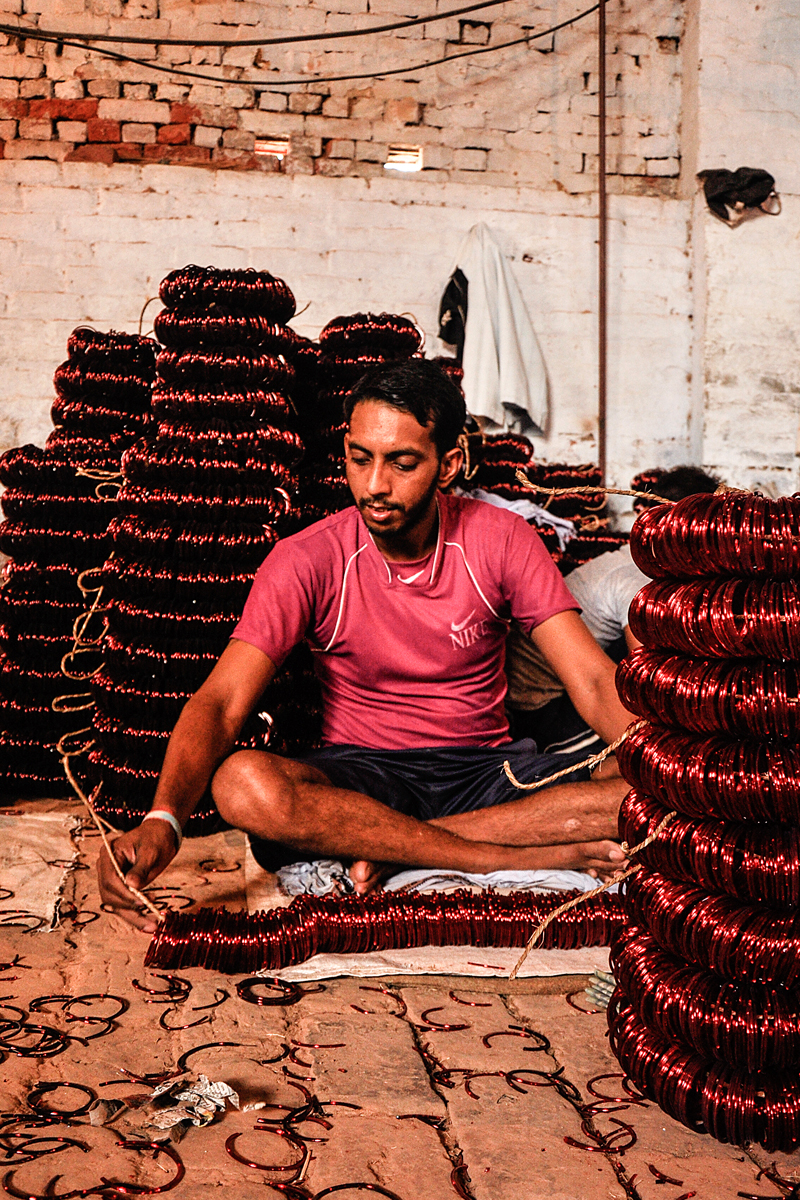
“I have been working in the bangle industry since I was a child.
These glittering bangles sold and bought without a thought are a
result of our sweat and blood. Each bangles passes through at
least 80 hands before it reaches the customer’s hand,”
said Babu Ram Mishank, 80, President of a labourers’
union.
Glass has been known to mankind for thousands of years as a versatile material that can be shaped into a variety of items. Glass bangles are one of the most popular glass accessories.
Source: dsource.in
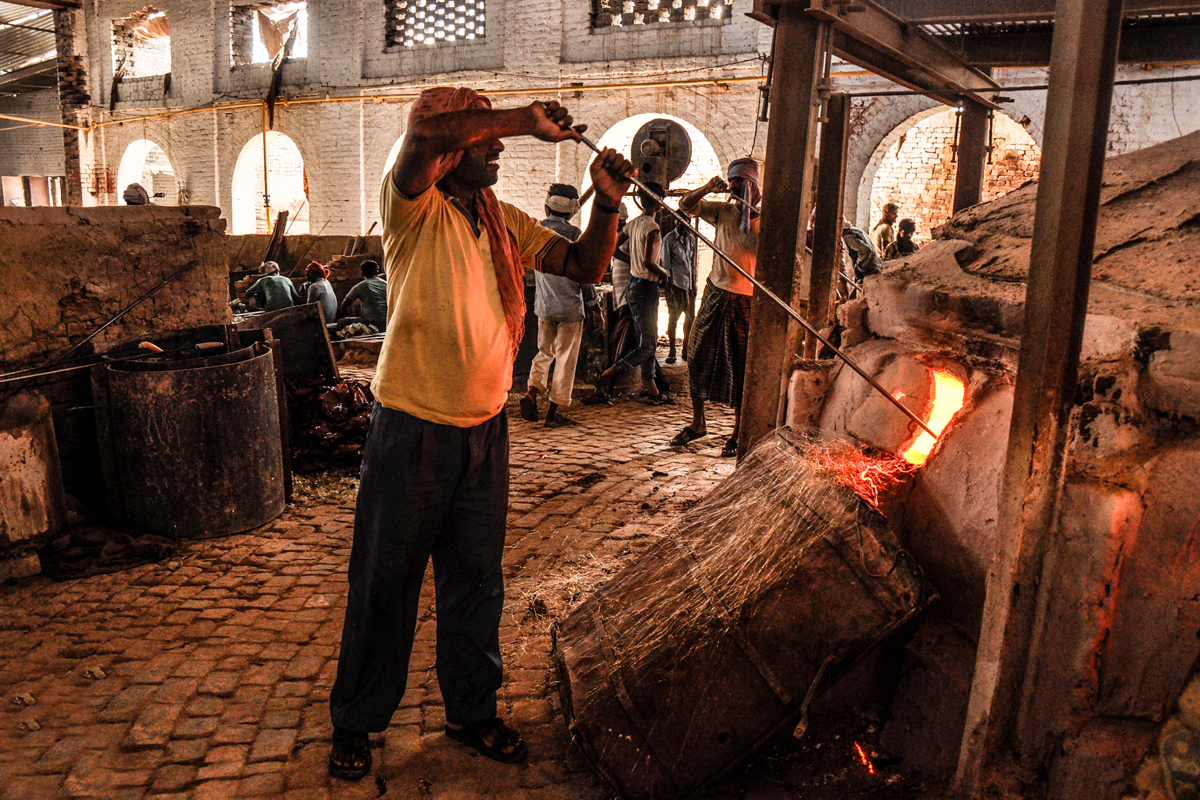
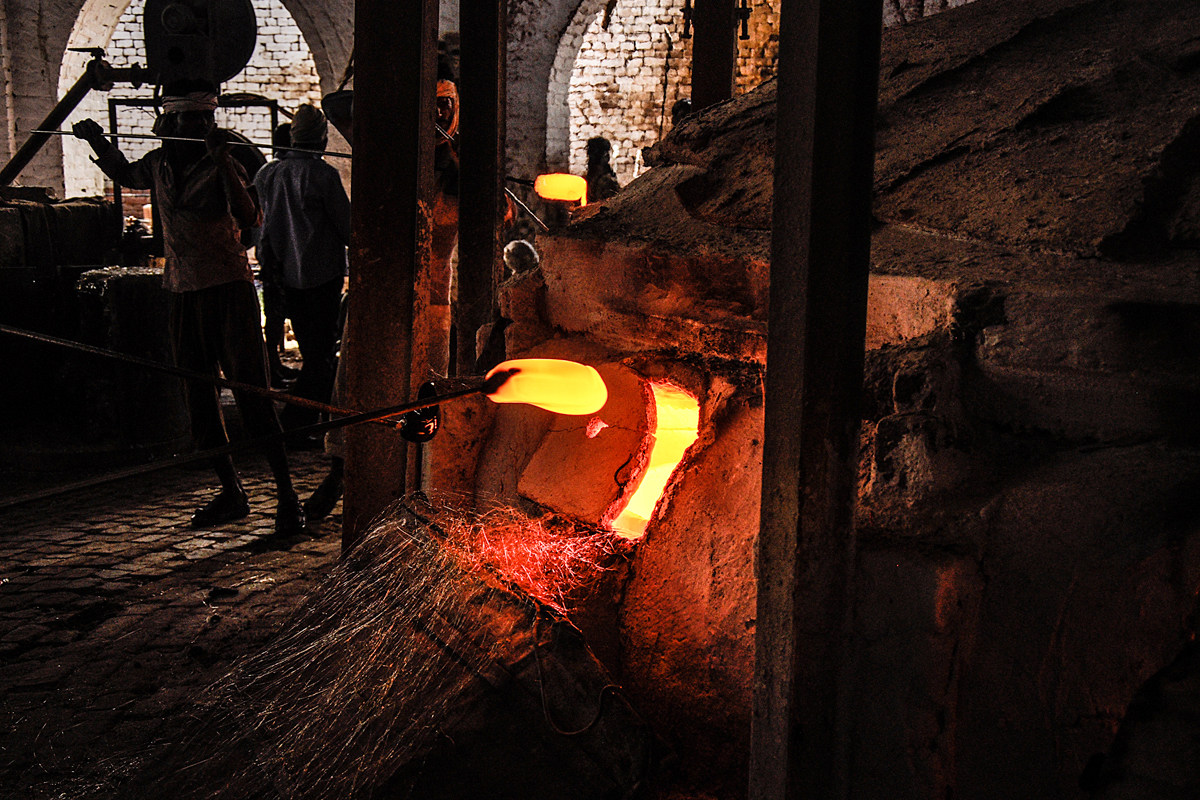
Bangles are made of soda glass and are made from glass melted in a tank furnace at temperatures between 1300 and 1400 degrees Celsius. The artisan first pinches out a glob of molten glass from the tank furnace with a long iron pole, then quickly transfers it to another artisan who shapes the glob into a conical shape by rotating the rod and using a customised tool that looks like a trowel.
Source:
dsource.in
Source: dsource.in
Source: dsource.in
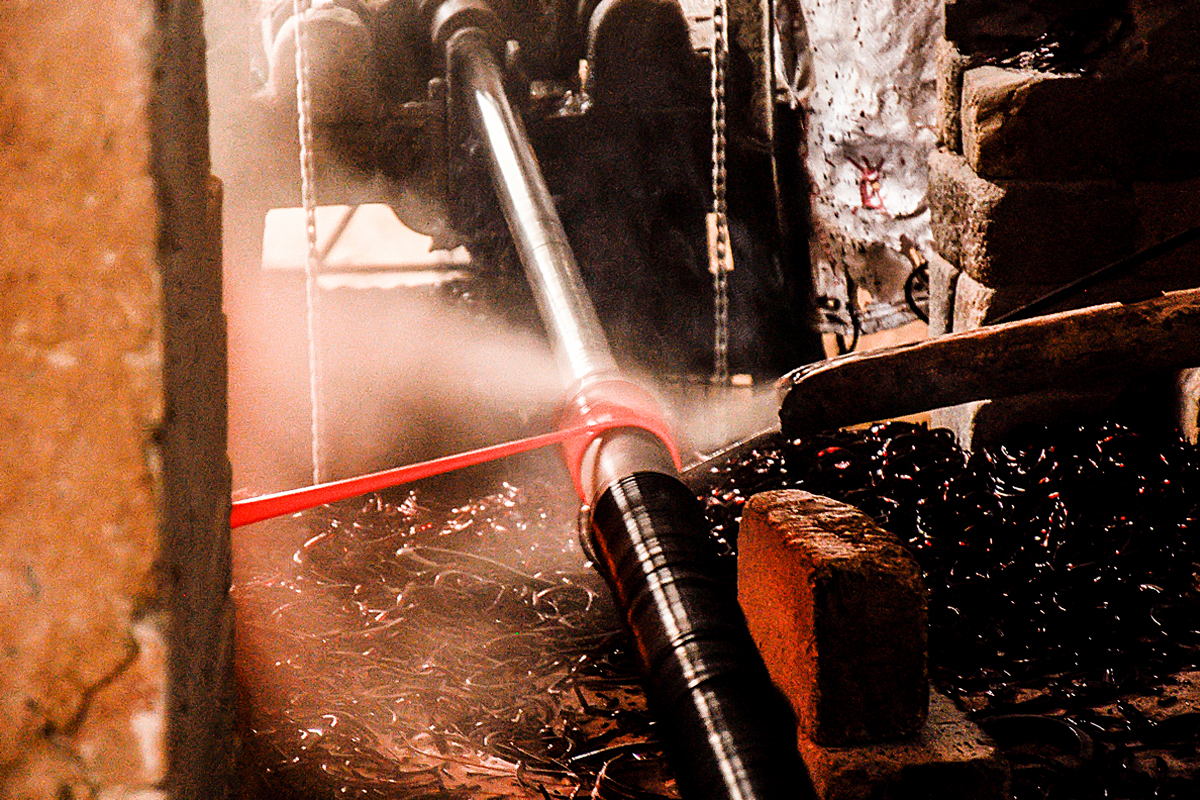
The melted glass is then moved to another furnace, where Artisans work in unison with the machine, drawing a thin filament of glass from the melt and placing it steadily on a rotating rod driven by a motor. The molten glass loops around the rod, forming a bangle. The thickness of the bangle is adjusted by applying the appropriate amount of pull to the softened glass. These rotating rods are available in various diameters, depending on the size of the bangle desired. Before the molten glob exhausts, next glob is attached to the previous one to keep continuity.
Source: dsource.in
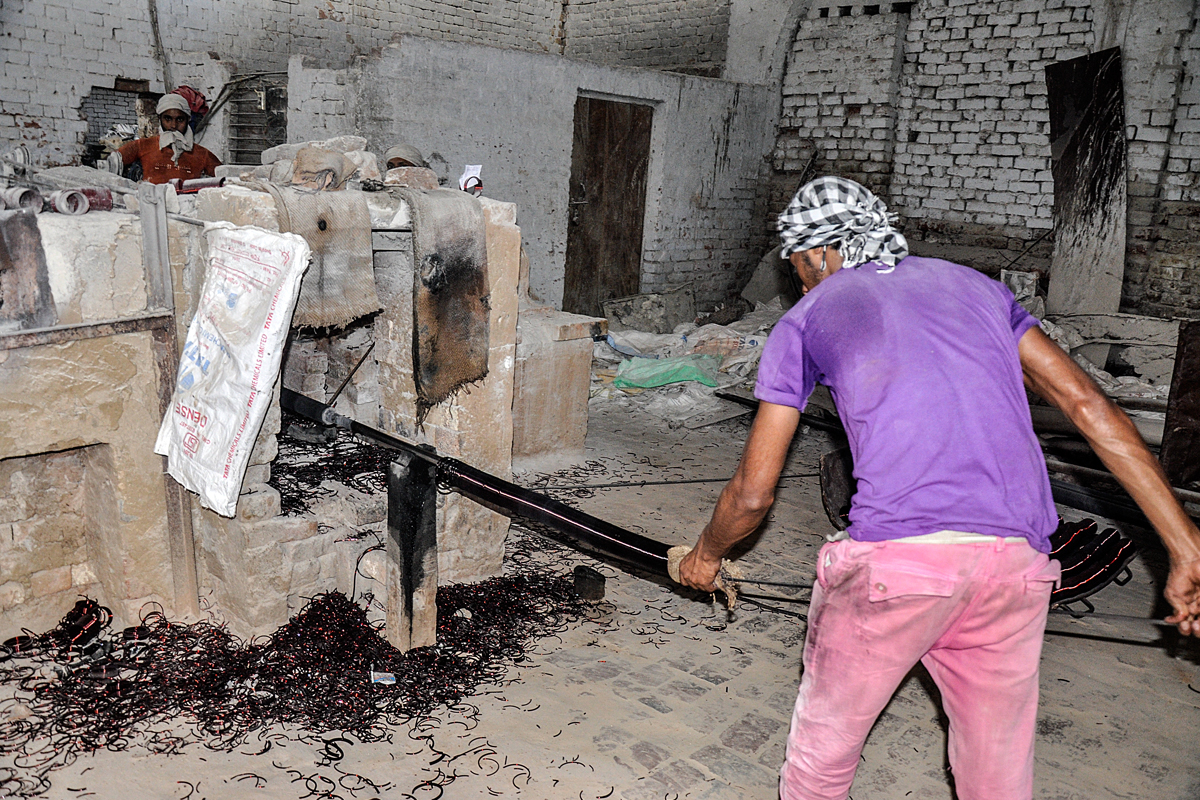
On the other end of the furnace, another artisan uses a metallic ruler/pointed instrument to keep the bangles from clinging to each other on the spindle and to ensure that only one layer of glass is rolled on. When the spindle is full, it will be removed, and the glass bangles, which resemble a long glass spiral, will be removed. These spirals are then carved using a diamond cutter to divide each bangle from the next.
Source: dsource.in
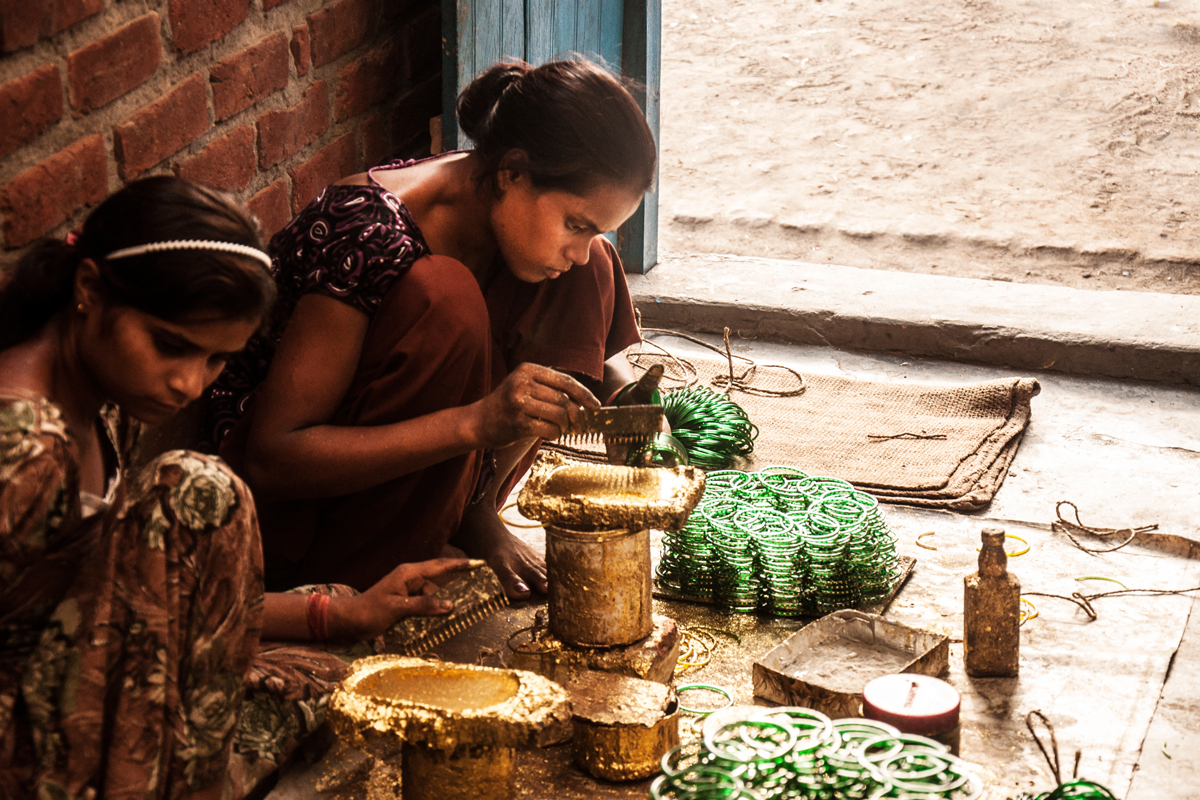
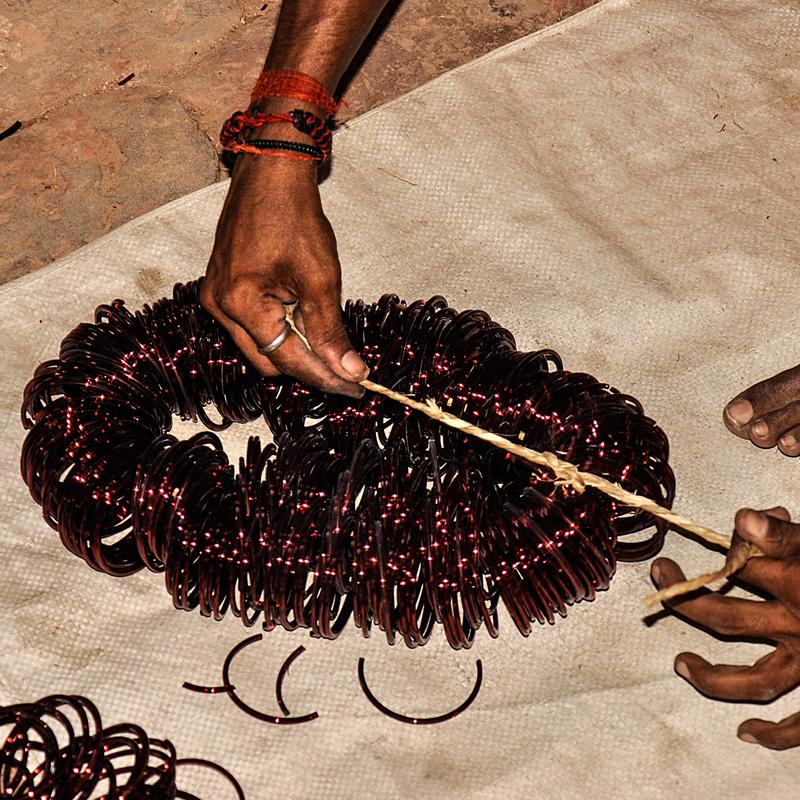
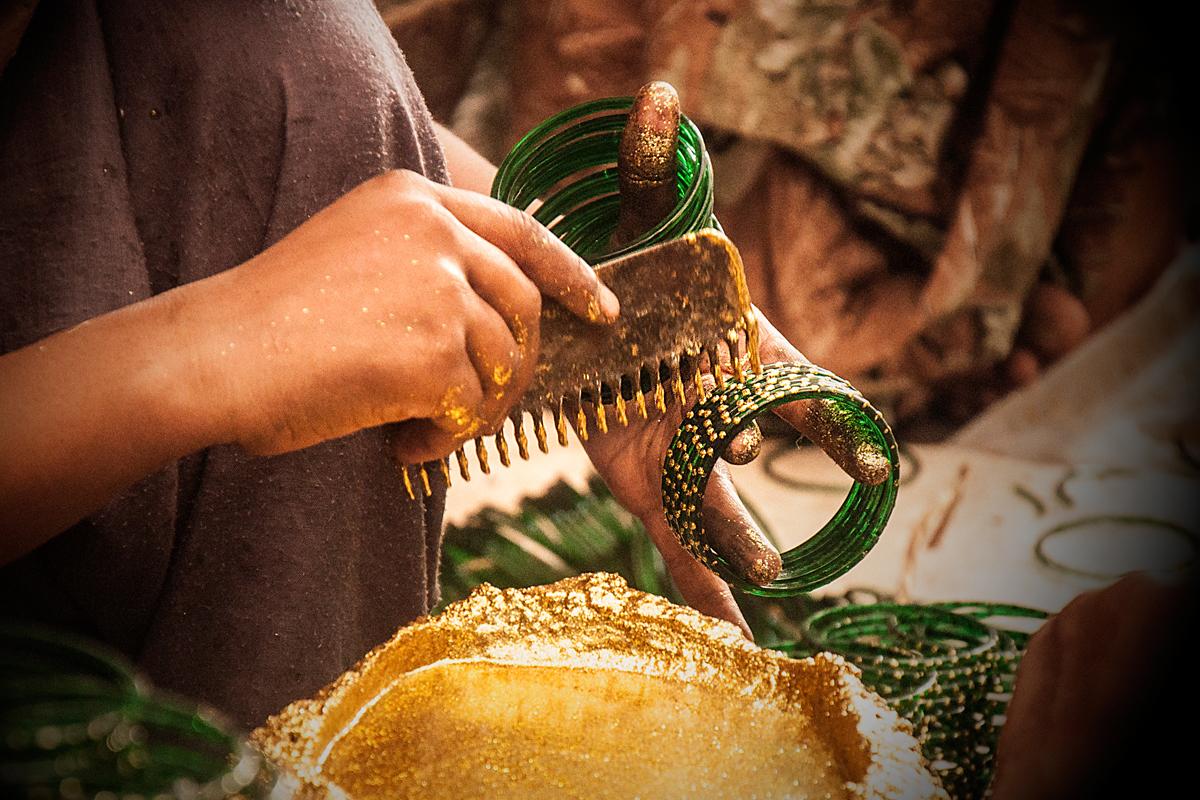
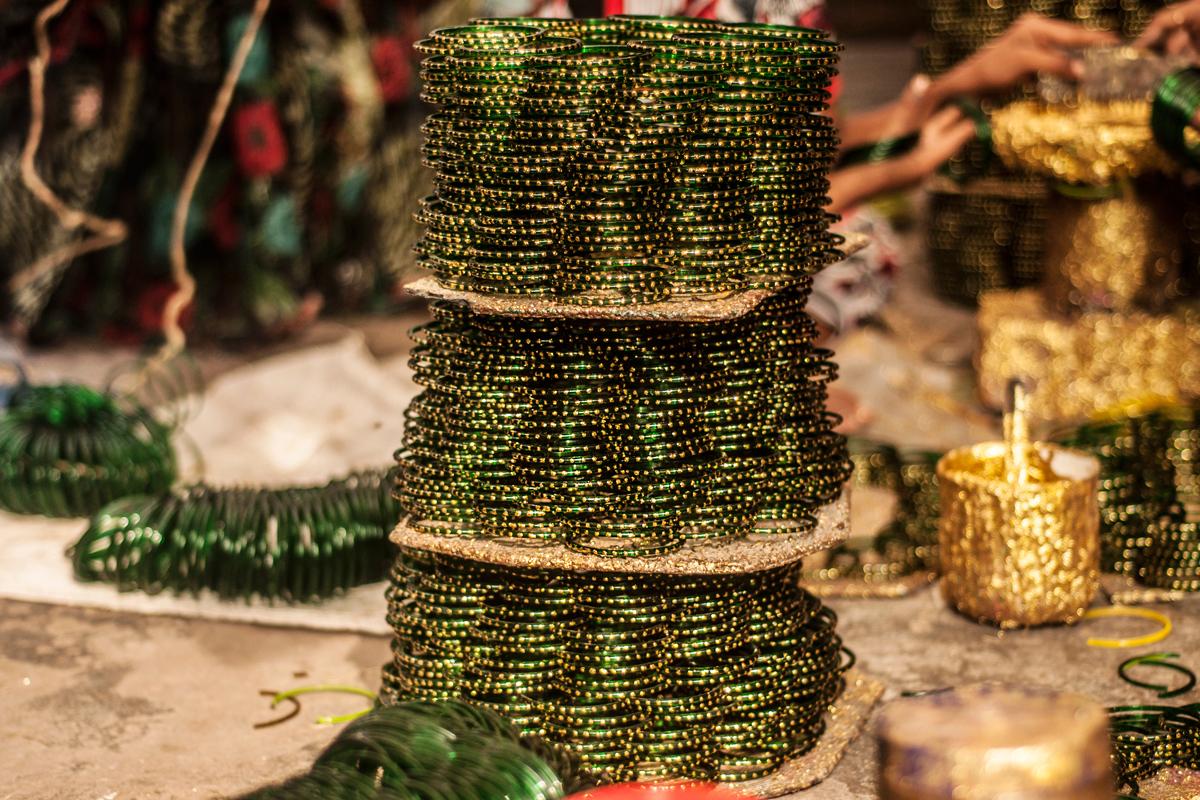
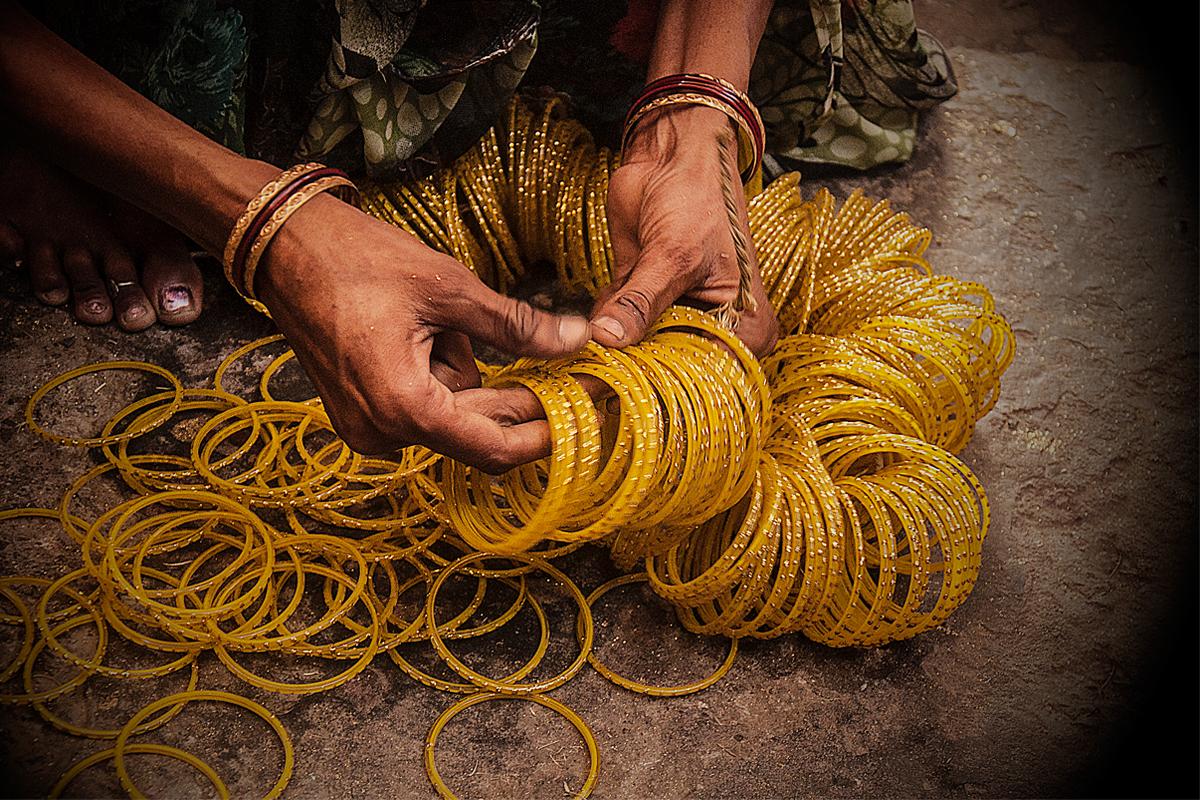
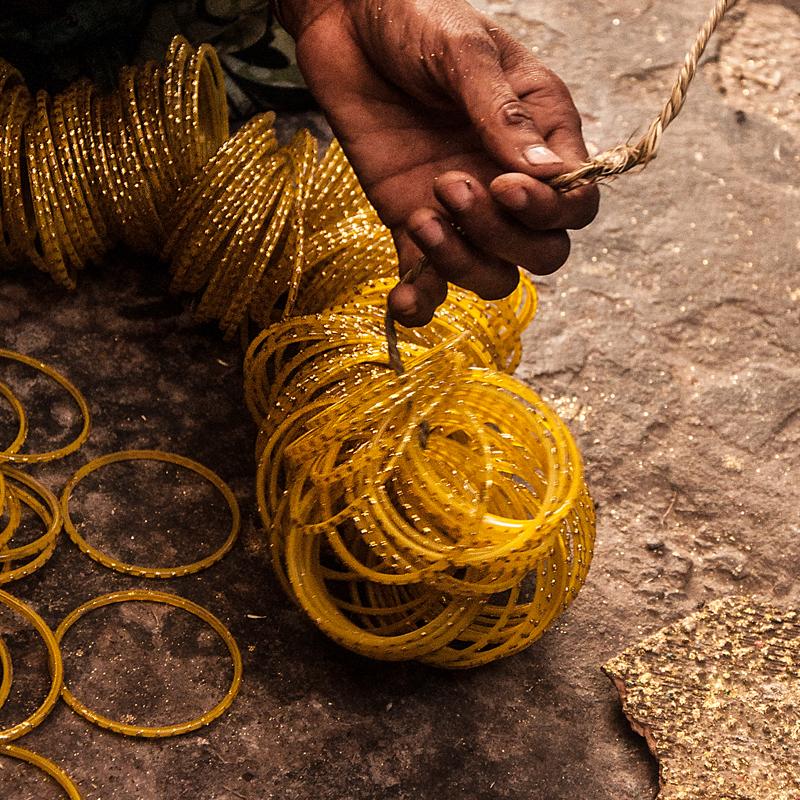
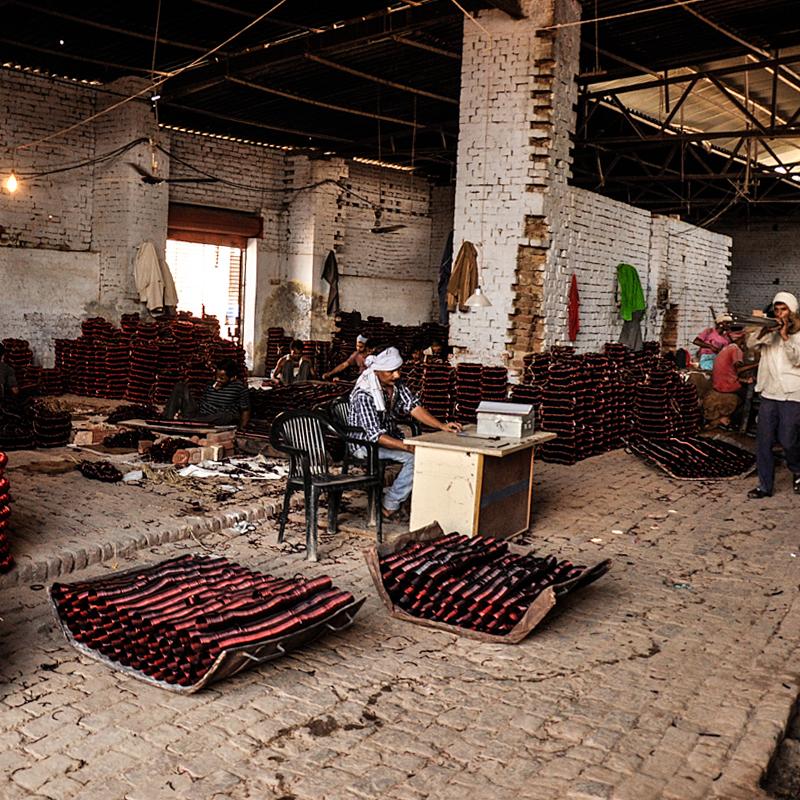
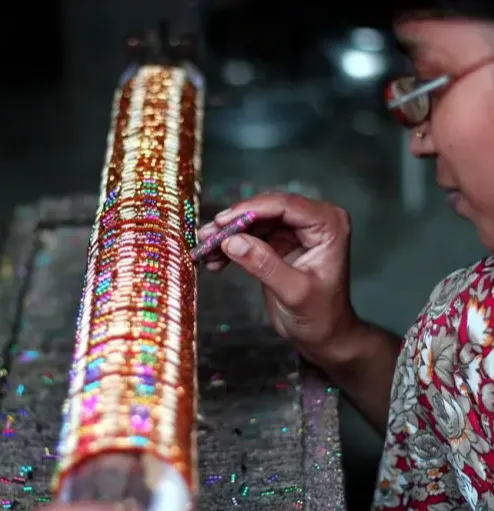
The open-ended and incomplete bangles are then taken to be joined over a candle or a kerosene lamp, a process known as (Judai), which literally means joining. They slightly melt the bangle to combined the ends, which is typically done by women. The surface of the bangles is further embellished with zari, silver/golden powder, and many exquisite patterns and designs. Finally, the bangles are baked in a pakai bhatti furnace, which smooths down the jagged edges and makes the bangles bright and appealing. Bangles are interwoven and strung together, then packaged in cardboard boxes for shipping, export, or market sale.
Main Information:
D'Source,
Aljazeera.com,
Wikipedia,
Inditales.com
Images:
D'Source,
Google Images,
Aljazeera.com,
Wikipedia,
Pixibay
Thanking:
Thank You